

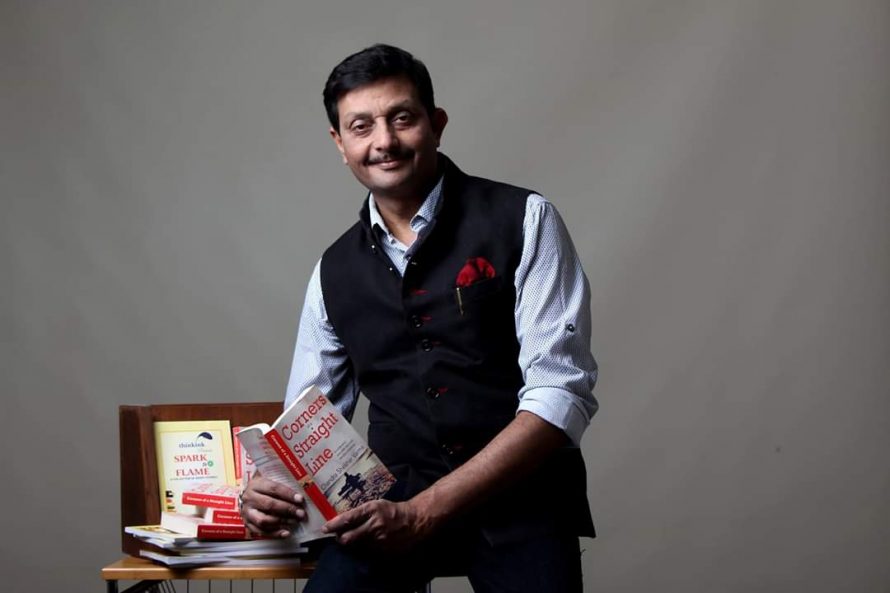
A behavioral scientist and motivational speaker by profession, and a Hindi poet by passion Chandra Shekhar Verma has inherited literature from his eminent grandfather, Padma Bhushan Shri Bhagwati Charan Varma, and also from his father, Shri Dhirendra Varma, who is a well-known Hindi author. Here is the abstract of his interaction with Ishika Sethi.
Ishika Sethi: From dealing with the minds of people as a psychologist to dealing with the hearts of people as a poet, how did this journey begin?
Chandra Shekhar Varma: I opted for psychology as a subject because the concept of reading the minds of people interested me. But then, somewhere down the line, I realised that you cannot read the minds of people until and unless you get to know about their heart, the emotional side of the being. So, in order to connect with the heart and emotions of people, I thought of using poetry as a tool. Though I could have started as a poet because of my lineage, I come from a family of writers because of which poetry came naturally to me. But I was not a pro at it. I became more interested when I thought that I can use poetry as a means to connect with the sensitive side of the people. And hence this journey began.
Ishika Sethi: What is poetry to you? And what do you see as the role of poets in modern-day society?
Chandra Shekhar Varma: Poetry is a verbal magma – so explosive, so magical and incredibly alive. It’s a therapy, a form of expression wherein you put together all that you observe, you feel, you experience and that of you perceive. I feel that it is a means to vent out your thoughts and your emotions which otherwise if confined within self, serves as toxics for your body as well as your mind.
As the time has evolved, so is the role of poets. Today, the generation is drowned in the sea of sentiments to which a poet should give them hope so that they can see a ray of optimism in their monotonous, pessimistic life. Secondly, I feel that it is important to share your philosophical thoughts with the world because we’re living in times where technology has bombarded our lives to such an extent that we hardly get any time to sit, think and analyse. Thirdly, love and romance has become an integral part of every human’s and a poet through his poetry is able to relate with the sentiments of people.
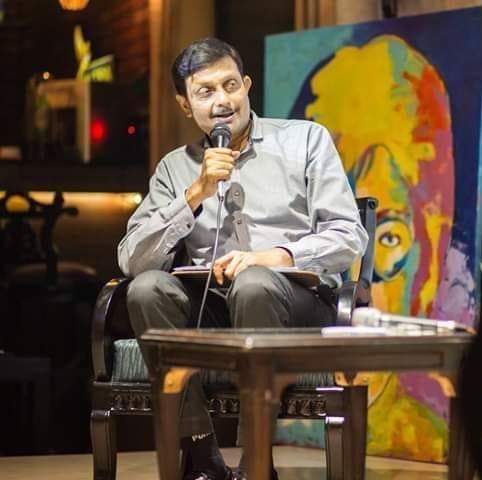
Ishika Sethi: What made you want to become a Motivational Speaker?
Chandra Shekhar Varma: During my college days, I was very shy of public speaking. And a debate competition was organized in the girl’s college. Luckily, I got an opportunity to perform there. As soon as my name was called, I walked up the stage, took on the podium but I didn’t utter a single word. I got nervous out of my wits with my body shivering and numbness which could directly be seen on my face. I was choked and was not able to speak a single word. Then the moderator asked me ‘Will you speak?’ and after gathering all my courage, I was just able to say ‘No’. After all this, with all the infamy, I walked down the aisle coupled with all the girls staring at me. That was the most embarrassing situation of my Life. And that was the day when I decided that I have to get myself out of this trap of fear of public speaking. I took it as a challenge and started practicing with all my heart and soul. Some of my favorite topics to speak on are philosophy, politics and relationships.
Ishika Sethi: What do you think, in which way are you able to connect more with the people – as a motivational speaker or as a poet?
Chandra Shekhar Varma: If you ask me, it is difficult to differentiate but one thing I would like to tell you is that when I recite my poetry, I sometimes try to make it motivational for the audience. And sometimes when I connect with the people as a motivational speaker, then I try to motivate them with the help of my poetry. Hence, using both the aspects in one go. So, for me both these subjects complement each other.
Also, recently I’ve come up with a series in which based on my poetry, my couplets, I deliver a lecture.
Ishika Sethi: That’s truly amazing, I would love to attend your lectures someday. Now, moving to next question, amidst this pandemic, we’ve heard a lot of cases of suicide. Taking that in consideration, would you like to give any message to our readers, especially the youngsters?
Chandra Shekhar Varma: I’ll personally invite you, Ishika. Now coming to your question, it is a very sensitive topic and this pandemic has manifested a few things which were under the cover and the good part about it is that people have now started addressing these issues. I would like to tell you the genesis of why all this is happening. Suicides primarily are a result of growing competition, increasing pressure, self-hatred, relationship issues, failures and disappointments. Ever since a child is born, he’s instructed to deal with a situation with light heart and when the pressure or problem is imposed on the child, because of that light heart the child is unable to bear it and sees suicide as an escape. So, I would just like to say that have patience, trust yourself and wait for another day because everything comes to you slowly and gradually. It takes no time for your fortune to change and fortune changes for everybody that’s for sure. Life is very precious. Live it to the fullest and never let such dismissive thoughts enter your mind.
Ishika Sethi: Alright, Sir. Thank you very much. It was an honour talking to you.


